
Zecharia Sitchin (July 11, 1920 – October 9, 2010) was an internationally known author who popularized the pseudoscientific "ancient astronaut" hypothesis to explain human origins. He claimed that the ancient Sumerian gods were actually an extraterrestrial race called the Anunnaki from a hidden planet named Nibiru, which orbits our sun every 3,600 years.
Wiki
⭐VIDEO: Zecharia Sitchin⭐

The Anunnaki are a pantheon of ancient deities worshipped in Mesopotamia (Sumer, Akkad, Assyria, and Babylon). In historical mythology, they were the "princely offspring" of the sky god Anu and the earth goddess Ki, and were responsible for decreeing human fates. Modern pop culture often portrays them as extraterrestrials.
Wiki
⭐Info Anunnaki⭐
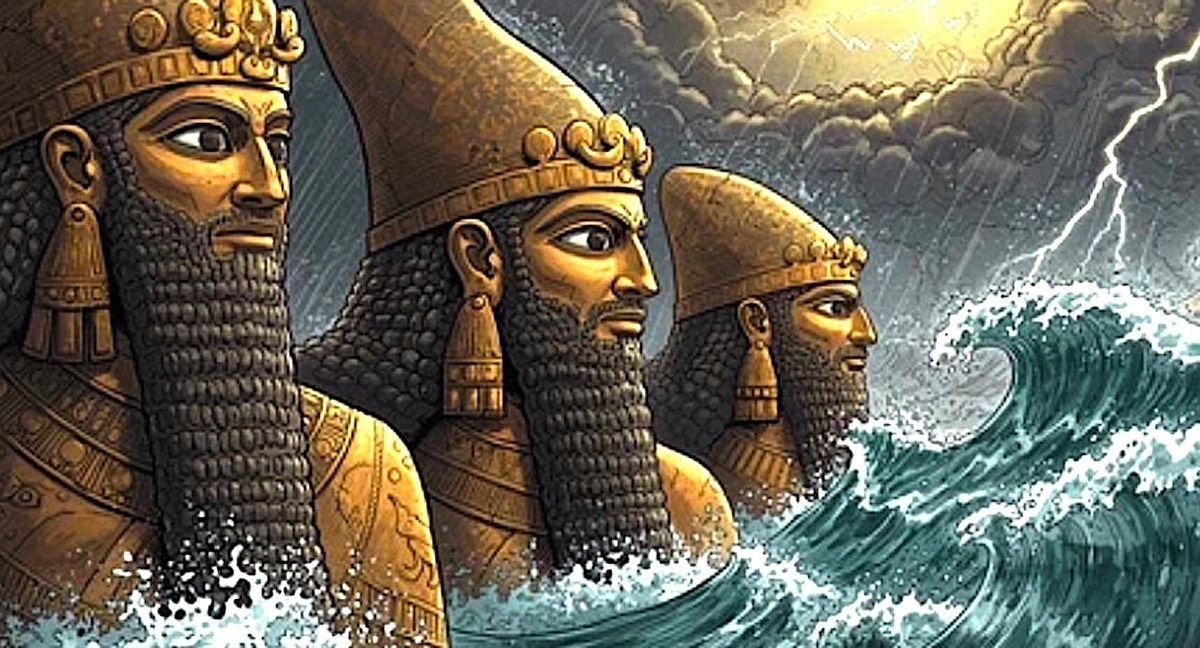
The Anunnaki are mentioned in ancient Sumerian texts as powerful deities who descended from the sky to influence human civilization. These beings not only guided the Sumerians in the development of their culture, but also participated in the creation and evolution of mankind.
gaia.com
⭐Gilgamesh Epic⭐

The literary history of Gilgamesh begins with five Sumerian poems about Gilgamesh, king of Uruk, some of which may date back to the Third Dynasty of Ur (c. 2100 BCE)
Wiki
⭐Info Sumerians⭐

The Sumerians were responsible for many of the most important innovations, inventions, and concepts taken for granted in the present day. The World’s First Civilization roughly 4500 - 1900 BCE.
worldhistory.org
💥Rewrite History?💥

Michael Tellinger's "Slave Species of God" enables evolutionists and creationists to finally co-exist in one pond. The arguments are compelling, simple and refreshing, retracing the path of human evolution from the murky distant past to the religious dogma that haunts humankind today. The question of who we are and where we come from takes on a new meaning as we discover that our DNA may have been manipulated by our Creator some 200,000 years ago to produce a less intelligent 'primitive species'.
Michael Tellinger
💥Info History💥
History is the systematic study of the past. As an academic discipline, it analyzes and interprets evidence to construct narratives about what happened and explain why it happened, focusing primarily on the human past.
Wiki